What happened over Atlanta’s Hartsfield-Jackson airport recently is the kind of situation that keeps pilots up at night. On paper, it was just another busy afternoon at the world’s busiest airport. In reality, a single lapse in situational awareness in the control tower sent two fully loaded Delta passenger jets flying straight toward each other, leaving onboard computers to save the day at the very last second.
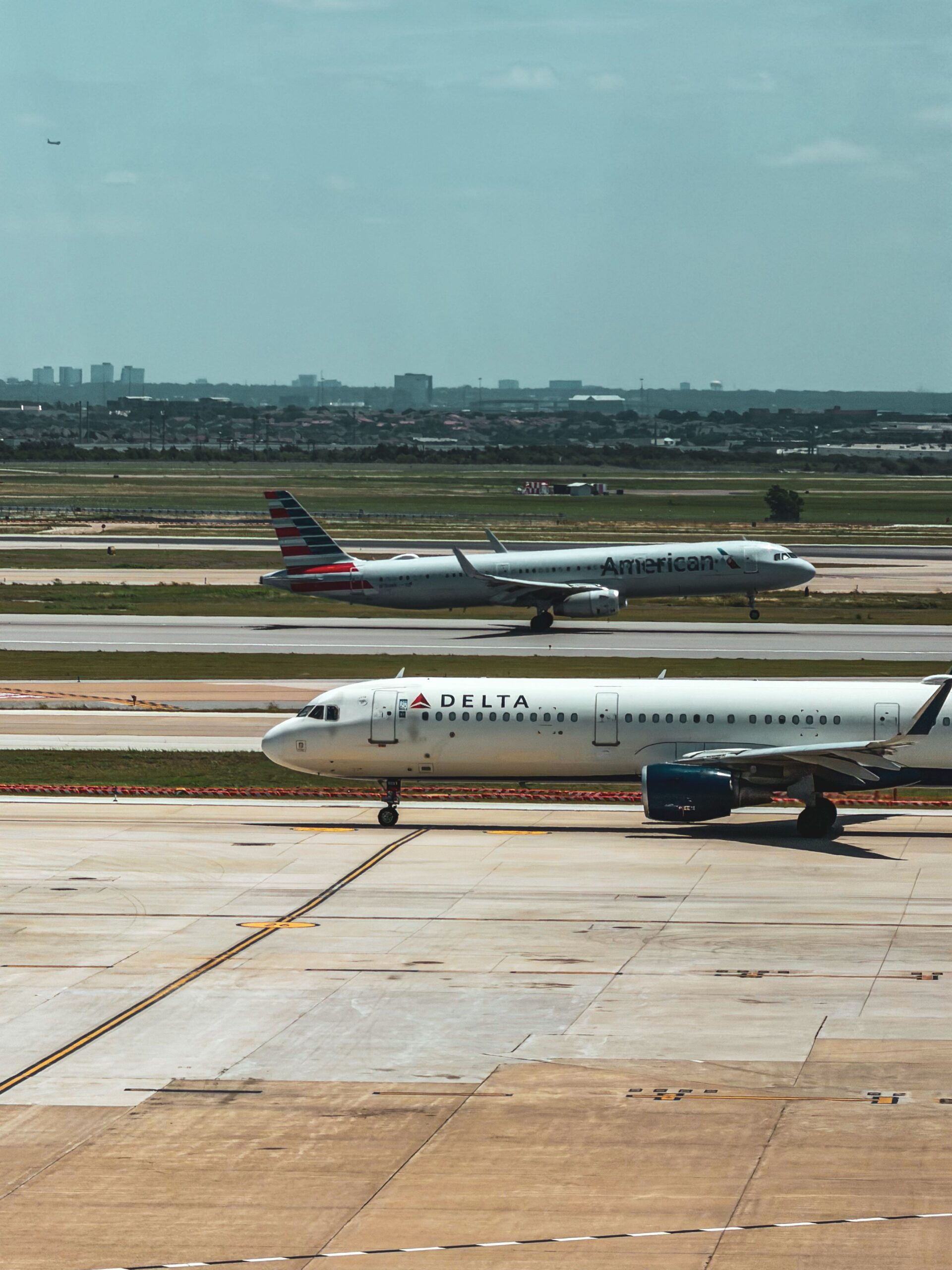
The setup was fairly standard for a mega-hub like Atlanta, where parallel runways run side by side. On Runway 26L, Delta Flight 2472, an Airbus A321 bound for Rochester was rolling down the tarmac and lifting off. On the parallel strip right next to it, Runway 26R, Delta Flight 1568, a Boeing 737 arriving from Pittsburgh was coming in for a routine landing.
Then the dominoes started falling.
The landing Boeing couldn’t touch down because a Frontier Airlines jet ahead of it hadn’t cleared the runway in time. Standard procedure kicked in, and the Delta crew executed a go-around, pulling the nose up to climb back into the sky and set up for another attempt.
At this point, the situation was manageable. You had one Delta jet climbing off the left runway and another climbing off the right. As long as both planes maintained their headings and kept flying straight, their paths wouldn’t cross. They just needed clear instructions to separate their altitudes and route them into different airspace.
Instead, the controller made a catastrophic call.
Apparent confusion or fatigue got the better of the tower controller. Rather than keeping the aircraft separated, she keyed her mic and instructed the Airbus on the left to make a sharp turn to the right. That instruction pointed the taking-off jet directly into the flight path of the Boeing climbing out right beside it.
If you listen to the air traffic control recordings, you can hear the hesitation in the cockpit. The pilots on the departing Airbus knew something wasn’t right about the heading, but following controller orders is deeply ingrained in flight culture. They began the turn. Within seconds, the two jets were converging fast, their vertical distance collapsing to around 500 feet, an uncomfortably tight margin when two massive commercial aircraft were banking toward one another.
That’s when the planes’ automated safety systems stepped in. The onboard Traffic Collision Avoidance System, or TCAS, detected the imminent danger and triggered an immediate Resolution Advisory in both cockpits. TCAS is designed as a hard failsafe. When it goes off, its computer-generated commands override anything a human controller says on the radio. One plane is told to climb, the other to descend or level off, and pilots are trained to follow those orders instantly without question.
The crews reacted immediately, following the automated prompts to pull away from each other and re-establish a safe buffer. Back in the tower, the controller seemed visibly shaken on the radio as the gravity of what almost happened set in. Within a minute or two, another controller stepped in to take over the frequency so she could step aside and recover.
The two flights suddenly arrived at their destinations safely, but uncomfortable conversation across the aviation industry was sparked by a close call. Modern air travel relies heavily on human precision, but when fatigue, crowded airspace, and rushed communication collide, the safety margin thins out faster than anyone likes to admit. This time, good technology and sharp pilot instincts prevented a tragedy, but it was a sobering reminder of just how fragile that margin can be.